
Upper School’s First-Ever Civil Rights Trip to Alabama
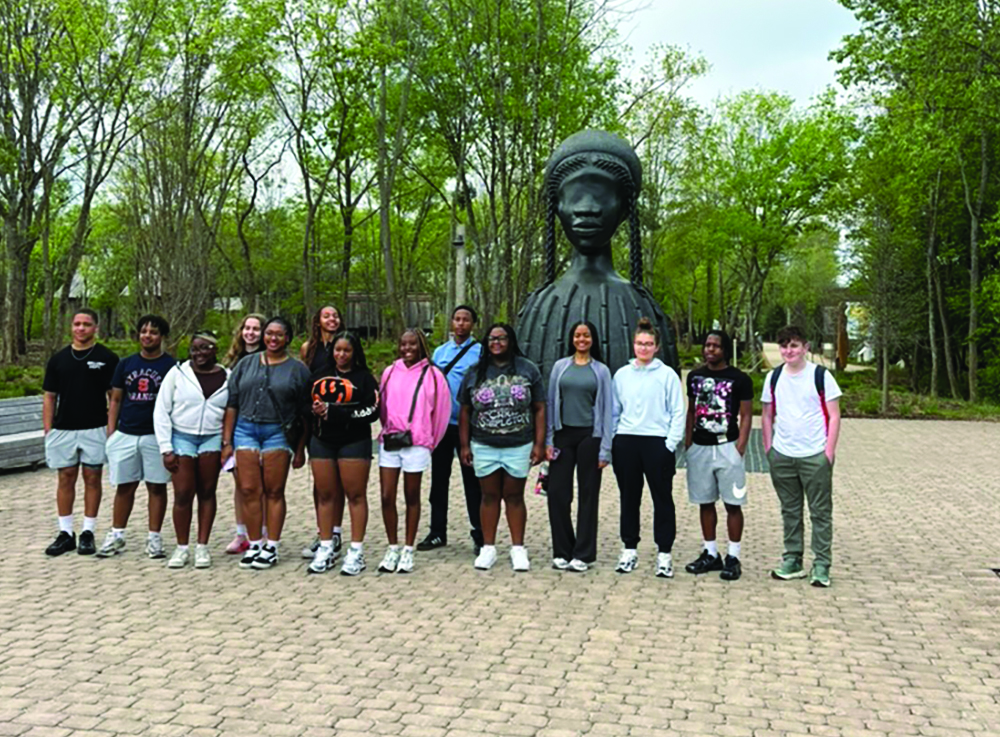
Last spring, a group of Friends Select upper school students traveled to Alabama to experience the history of the Civil Rights Movement firsthand. During the six-day journey, organized in partnership with William Penn Charter School and Germantown Friends School, they visited places where ordinary people made extraordinary sacrifices in the pursuit of justice. More than a history lesson, this trip invited students and educators to experience the emotional weight of the movement’s enduring legacy and consider what it asks of them today.
Former upper school dean of students Norman Bayard P’24, ’28 led an application process for interested students, designed to identify those ready to engage deeply with the experience. “I was specifically looking for authentic answers,” he said. “I was clear with the students that this would be a transformational experience, and we all are going to walk away feeling a lot of heaviness. I was also looking for students who have a commitment to social justice and worldwide civil rights movements.”
From March 21-26, Norman and director of equity and inclusion Toni Graves Williamson accompanied five upper school students as they visited landmarks across Alabama, including the Freedom Monument Sculpture Park, the 16th Street Baptist Church in Birmingham, and the Mothers of Gynecology Museum.
At the Freedom Monument Sculpture Park, many students were moved to tears, comforting one another as they encountered powerful memorials to racial terror and resistance. At the 16th Street Baptist Church, they listened to a survivor of the 1963 bombing describe what it was like to be a teenager when the church was attacked. Students were especially saddened to learn that, in addition to the four girls killed in the bombing, two Black boys were murdered nearby in separate acts of racial violence that same day.
For Toni, visiting the Mothers of Gynecology Museum and meeting its founder, artist Michelle Browder, were among the trip’s most powerful experiences. The museum featured three large sculptures—Anarcha, Betsey, and Lucy—created to pay tribute to the enslaved Black women who were subjected to experimental surgeries without anesthesia or consent in the 1840s by Dr. J. Marion Sims. Toni reflected, “Michelle took something that was such a negative piece of history and retold the story through her art, sculpting these women who had been enslaved and taken advantage of for modern medicine in such a different light. Seeing the way she honored them really stayed with me.”
Because the experiences were often emotionally overwhelming, Norman and Toni intentionally built in time for reflection through journaling and Quaker-style worship sharing. On the bus between visits, students had quiet time to reflect or journal. In the evenings, the group gathered for debriefs. Students were invited to check in with themselves and one another, to name what they were feeling, and to reflect on what they would do with this experience once they returned home.
For Rayyan ’29, those conversations became one of the trip’s lasting memories. “One conversation that has stuck with me since we returned from the trip was when Norman sat everyone down and said that it’s okay to feel sad or cry,” he said. “He showed us that this trip would bring back mixed feelings for everyone.”