
Caring for Our Community
In Conversation with Recently Hired Employees
|
In this continuation of our Select News series, we highlight some of the outstanding employees who have recently joined Friends Select and have shared their perspectives on our school. |
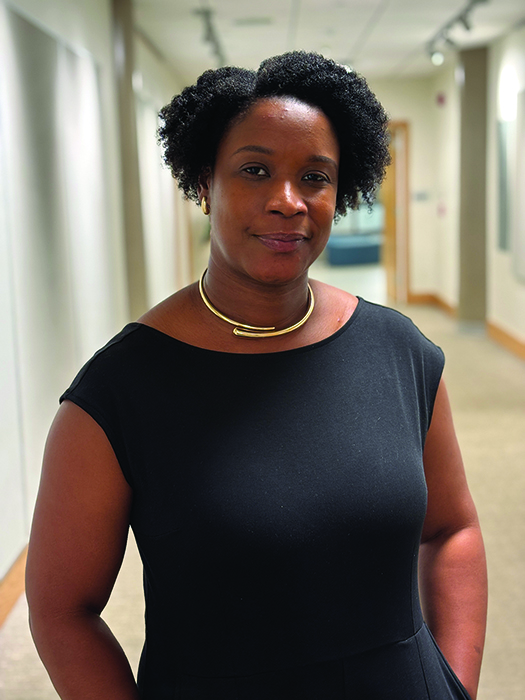
Katrina McKnight
Middle and Upper School Counselor
What drew you to Friends Select, and what has made your experience stand out so far?
What drew me to FSS was an opportunity to support students within a community that values the whole child. I have always valued a holistic approach when providing support to students. It has been refreshing to work in an institution that understands the importance of supporting students both academically and socio-emotionally.
My previous professional experiences afforded me an opportunity to join several different educational institutions, but the Quaker principle of community and the warm, welcoming environment have stood out the most for me at FSS. I began this job in the middle of the fall semester, which I anticipated would be a challenge. However, the students, faculty, staff, and families at FSS have welcomed me with open arms. I enjoy coming to work daily and learning more about this community. I value every interaction with all community members. I am looking forward to growing deeper roots within the FSS community and hope to model the Quaker testimonies to others.
How would you describe FSS students, and what have you learned from working with them?
Students at FSS are smart, thoughtful, and reflective. They are encouraged to practice decision-making with integrity, be curious thinkers, and strive to include others in meaningful ways. The students at FSS bring a sense of kindness to the school community, and they are demonstrating an increase in self-awareness and independence. I feel honored to be able to work with these students on a daily basis. They have taught me so much in a short amount of time. I have learned the power of silence. During times like Meeting for Worship or a student session in my office, I am reminded that connection and insight often come by just holding space. There are moments when allowing this quiet space provides an environment where courage is expressed and the freedom to express feelings in an honest way is displayed. Working with these students has deepened my practice as a counselor and confirmed why this work matters.
What do you find most rewarding about your role as a school counselor at FSS?
My time with students has been the most rewarding. Being able to support students through important stages, transitions, and difficult moments has allowed me to build trusting relationships and offer meaningful guidance. The Quaker value of seeking that of God in every person has shaped how I approach counseling at FSS. I want to build a counseling culture that allows students to feel they are seen, heard, and valued. That type of environment is important to me, and it’s one of the things I appreciate about being here.
How does the FSS community support student well-being, in and out of the classroom?
Student well-being is a community-wide commitment at FSS. This is based on the Quaker values of community, respect, and equality. I notice this with the daily interactions of students, faculty, and staff. Overall, there is an emphasis on students feeling safe, seen, and valued. In the classroom, teachers create spaces that focus on emotional safety and encourage student voices.
Social-emotional learning is integrated at all division levels. An example of this is from the use of the Wayfinder Curriculum across all divisions. I teach middle school wellness classes alongside my colleague, Natan Gottesman, our school psychologist. We utilize the Wayfinder Social-Emotional Curriculum to provide lessons for all students in grades 5 to 8. Students learn topics such as managing emotions, identifying stress-management strategies, and setting personal goals. Outside the classroom, the counseling team assists with connecting families to counseling services or other supports, if needed. Each division offers service-learning opportunities with students. Faculty and staff also take a team approach to student care, meeting regularly for grade-level meetings to discuss students. There’s an intentional effort to partner with families so that students know they have many adults they can turn to for guidance.
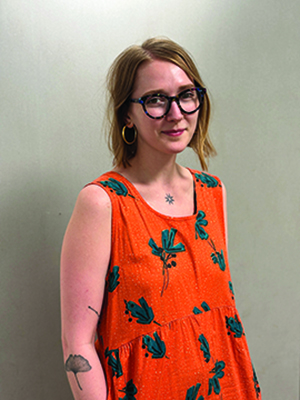
Abigail Swoboda
Pre‑Kindergarten Assistant Teacher
What has been most exciting about joining the Friends Select lower school faculty?
When I joined the Friends Select community five years ago, I was unaware of what a large and connected community this school represents in Philadelphia. For a while, it took me by surprise when, after telling someone where I worked, they would respond with some story or connection about Friends Select. Over time, I have come to see how this school brings people together across the whole city. It gives me a great sense of human connection and support to be a part of this network of people whose lives our school has touched in some way. I am a teacher, that is my job, but I am also a friend; this means a lot to me.
How would you describe the lower school learning environment at Friends Select, and what makes it unique?
So much of our strength is in our collaboration. First, the collaboration between the lead and assistant teachers as teaching partners is unique and means that there are two beautiful teaching brains in each classroom bouncing ideas, strategies, and strengths off one another every single day. Second, the collaboration between each grade team makes for robust and well-rounded studies that no one person could come up with themselves. Finally, so much of our learning is child-driven, meaning that as teachers, we are always listening to the kids and following their lead to structure learning in a way that is individualized, relevant, and engaging.
Every year, I feel as if I really know every one of my students as their own person; likewise, I really feel seen by our community of teachers, students, and families. No two of my five years at FSS have followed the same curriculum, and that is deeply exciting. I have helped to build emergent studies on butterflies, honey, world currencies, cellphones, dinosaurs, strawberries, Sister Cities Park, public transportation, and more. I can’t wait to find out what we’ll learn about next.
What do you love most about working with lower school students?
This is a hard question, as the answer could stretch on forever, so I will just list ten things. One: I love to play. Two: I love to try new things every day. Three: I love to make mistakes and learn from them. Four: I love to talk about my feelings. Five: I love having child-led conversations. Six: I love seeing kids grow so, so much throughout the year—socially, emotionally, cognitively, physically, etc. Seven: I love when kids teach me things they know that I had no idea about before. Eight: I love making art with kids. Nine: I love doing hard things. Ten: Slime.
How do you incorporate the values of the FSS community into your classroom?
One example of how I incorporate Quaker values into my classroom that is closest to my heart is a quilt project. Every year, I guide my students in the creation of at least one but usually two quilts that are value-centered. These quilts center the SPICES as well as Quaker values that are found outside of this list of six, such as social justice, kindness, and caring for the Earth. For lower school Social Justice Day this past school year, pre-K created a protest quilt that included a cyanotype print of every friend’s hand as well as the message: Every hand creates change. This led us to learning about textiles, sewing, and how shadows and UV rays work to make the cyanotype print, and finally, each friend had the opportunity to tie a knot that secured the quilt’s three layers together.
Our learning extended beyond the techniques required to make the quilt itself. While working, each friend was asked to think deeply about the queries: What is your wish for the world? What is something you think is wrong in the world that you would like to be different? How can you help to make change in our world? On Social Justice Day, we carried this quilt on our march around the school, as well as individual signs expressing friends’ ideas for change. My quilt projects are difficult technically and conceptually; they challenge young kids to engage their bodies and minds in some tricky work. At the end, though, there is always such a magical moment when we get to step back and look at what we made together: a piece of shared, value-driven artwork that is equally beautiful and powerful.
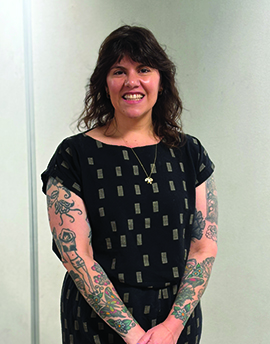
Elyse Wilson
Upper School Learning Specialist
What has been your impression of the approach to learning at Friends Select?
In my role as the upper school learning specialist, I have the opportunity to analyze curricular materials from all subjects and grade levels. I’m particularly impressed with the careful scaffolding and progression of skills from 9th to 10th grade and beyond. It’s clear that teachers intentionally support students through tools such as outlining and graphic organizers in 9th grade, gradually releasing these scaffolds over time. By 11th grade, most students are well-prepared to work independently, using teacher feedback to continue to guide them. The students I work with are consistently curious, eager to learn, and open to new opportunities and challenges. I am particularly impressed with the peer leadership that students are involved in with clubs and events such as Social Justice Week and service days.
How has the school environment encouraged collaboration or creativity in your role as a learning specialist?
In this role, I am available to support both students and teachers. I recently led a workshop, “Understanding and Supporting Neurodiversity at FSS,” providing faculty with the science behind learning differences, experiential simulations, and practical strategies to better support all students in the classroom. The workshop also offered a valuable opportunity to share my own experiences as a student with learning differences, as well as the stories of some of our students. I also work in partnership with Natalie Mayer P’32, dean of academics, to respond to real-time data from Blackbaud. This ensures that student support is targeted and preventive, and no one falls through the cracks.
With your experience working at other schools in our region, what would you say are the characteristics of FSS and its community that set it apart?
While FSS is experiencing growth, its smaller size sets it apart. Teachers are able to develop strong personal relationships with students. Whether our students like it or not, all students are known and seen here by the adults in the building—it’s very hard to hide! Beyond academics, the school’s extracurricular programming allows us to see students as whole individuals with talents that extend beyond the classroom.
Can you share a moment where you felt especially welcomed or supported by the FSS staff?
I’m incredibly grateful for the overwhelming support I’ve received at FSS, both personally and professionally. Numerous colleagues have shared their enthusiasm and appreciation for having a dedicated learning specialist for the upper school. As a lifelong learner, I’m thrilled that the school is committed to my professional development by providing opportunities to attend workshops and conferences on neurodiversity, executive functioning, social-emotional learning, and best teaching practices. As a new member of the FSS community, I’ve been excited to see experienced teachers, some with more than two decades of experience, be open-minded to new approaches to teaching, assessment, curriculum design, and student interaction. This collaboration has the potential to benefit all learners, not just those who learn differently.