
Joyful Learning:
How Academic Rigor Evolves in Lower, Middle, and Upper School
Friends Select School is creating a learning environment in which academic challenges and intellectual curiosity thrive alongside joy in learning.
|
From pre-kindergarten through twelfth grade, faculty provide students with an educational journey in which students are simultaneously challenged academically and feel fully supported. In turn, students develop a love of learning that helps prepare them for success in school and beyond. “Students in each division are engaged in rigorous learning, but not at the expense of their creativity or individuality,” said Friends Select head of school Michael Gary. “These elements are thoughtfully integrated into the curriculum.” |
Lower School
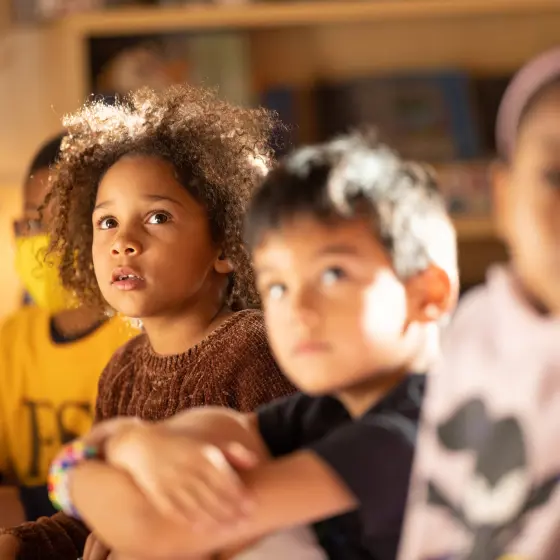
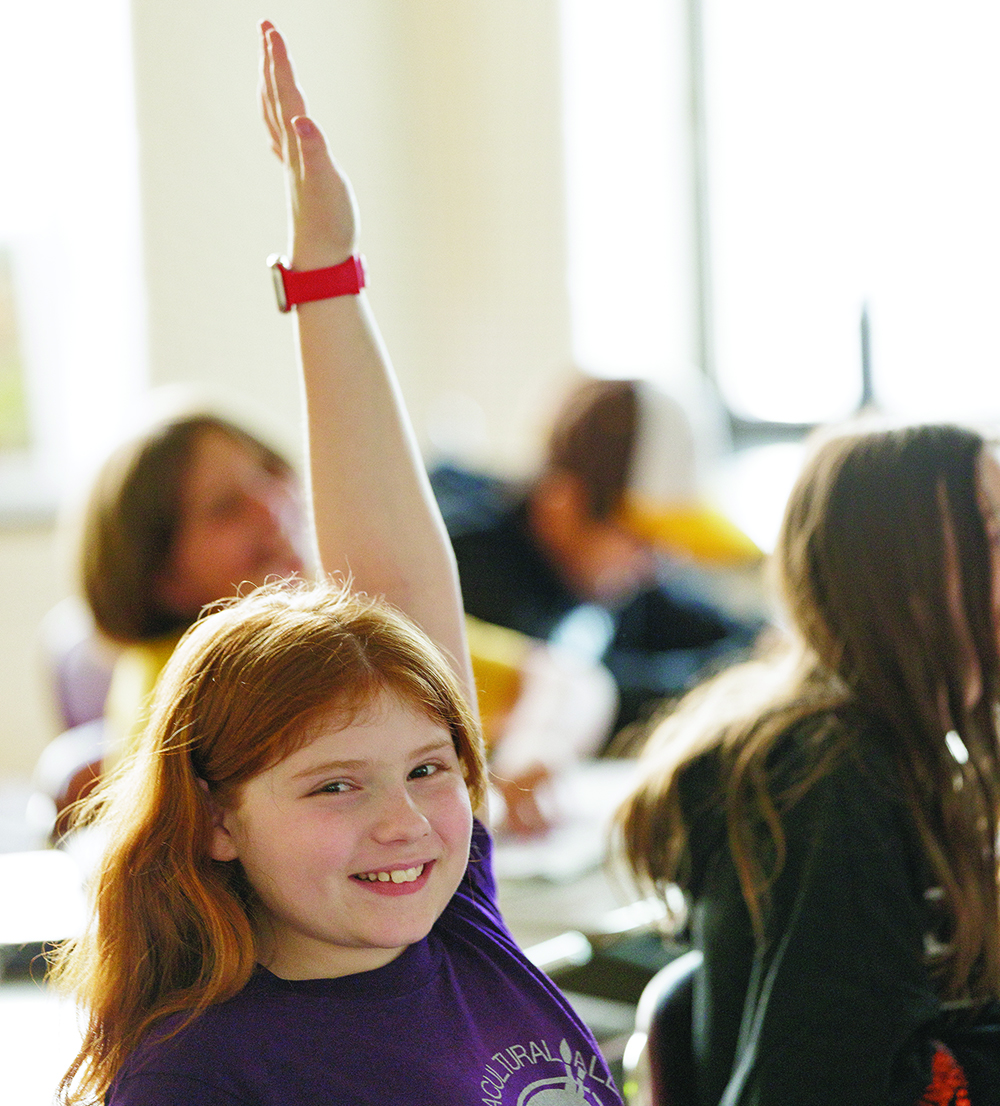
In lower school classrooms, faculty emphasize student agency, meaningful academic discourse, and differentiated learning. Students play an active role in their learning by engaging in a thinking curriculum, a dual curriculum that prioritizes the learning of content and skills alongside a curriculum that supports the development of thinking skills such as of “learning how to learn,” where students are engaged in as well as are taught, peer-to-peer discussions, and opportunities for the school’s youngest learners to challenge and build on one another’s thinking. “Strengthening our academic discourse so that students are learning from each other and pushing each other’s thinking, or asking clarifying questions, is a division-wide focus,” said Friends Select director of lower school Dave Younkin. “We are teaching students to support their thinking by explaining how they arrived at their idea, to share accurate knowledge, and to use academic vocabulary when explaining their thinking. Students find joy in arriving together at an idea that’s bigger than the one with which they started.”
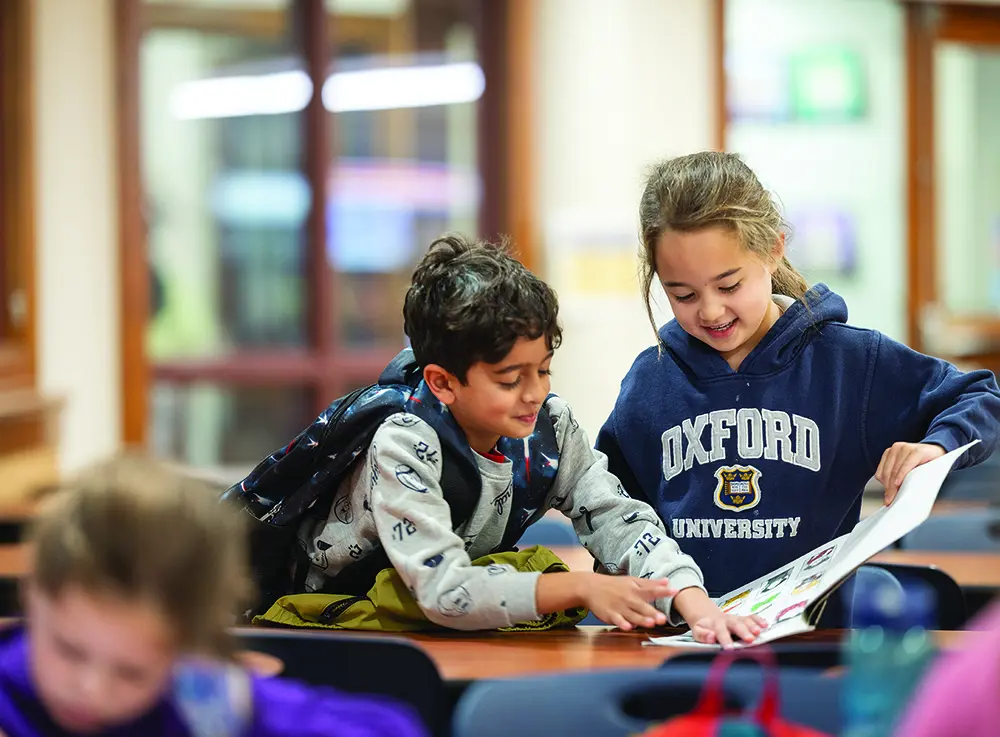
Through a three-year implementation plan that has transformed phonics and spelling curricula, lower school faculty have embraced the “science of reading.” Using a speech-to-print approach—grounded in how the brain naturally processes language—students link spoken sounds to written letters and patterns, helping them move quickly from “learning to read” to “reading to learn.” This research-based approach has produced dramatic improvement in our students’ decoding and spelling skills. In the 2024-25 school year nationwide, 55% of first graders assessed with the DIBELS (Dynamic Indicators of Basic Early Literacy Skills) system were scoring at or above benchmark levels. In March of that same year, with two months left in the school year, 100 percent of first-grade students at FSS were at or above the grade-level benchmark. According to the “science of reading,” background knowledge, vocabulary development, and writing instruction are critical in supporting students to become strong readers, writers, thinkers, and speakers.
“As students grow across lower school and beyond, we continue to engage them in more complex texts, and in-depth studies about new topics and ideas,” said Amanda Pitt P’39, one of Friends Select’s learning specialists. This process of learning about the world, discussing content and ideas, and writing about what they are learning builds vocabulary and background knowledge and develops students’ skills as writers and thinkers. Amanda added, “Just as we are looking at research to refine our phonics instruction, we are also looking for ways to continue to improve our practices to help students develop strong oral and written language skills. The more students read, the more they build their vocabulary and improve comprehension—skills that support success across all subjects, both in the lower school years and beyond.”
Middle School
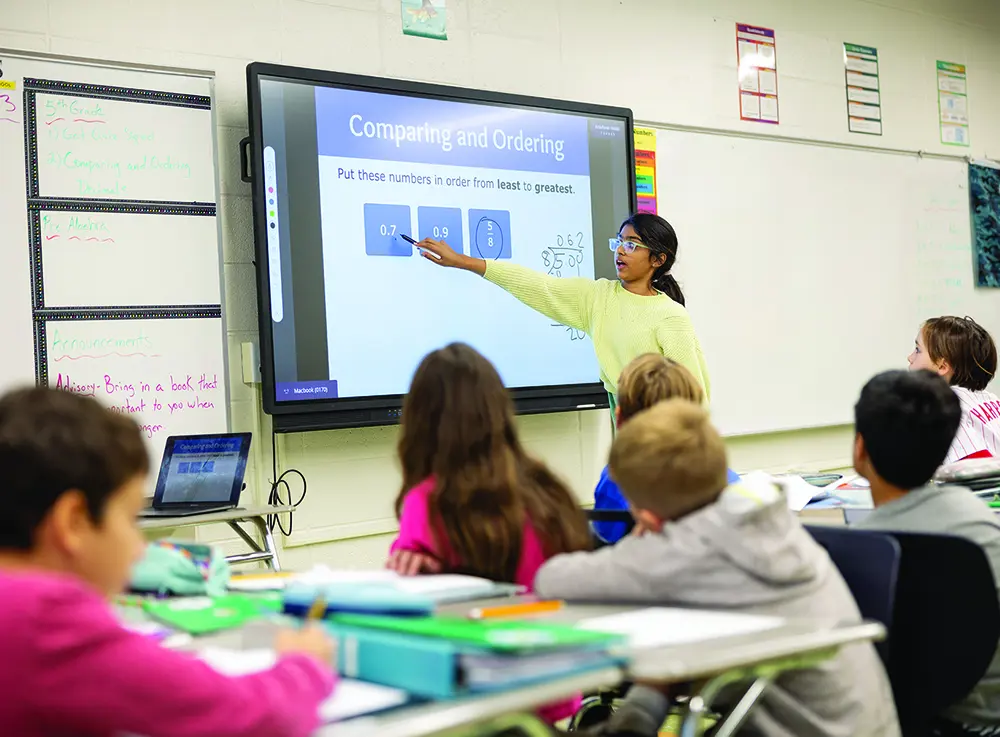
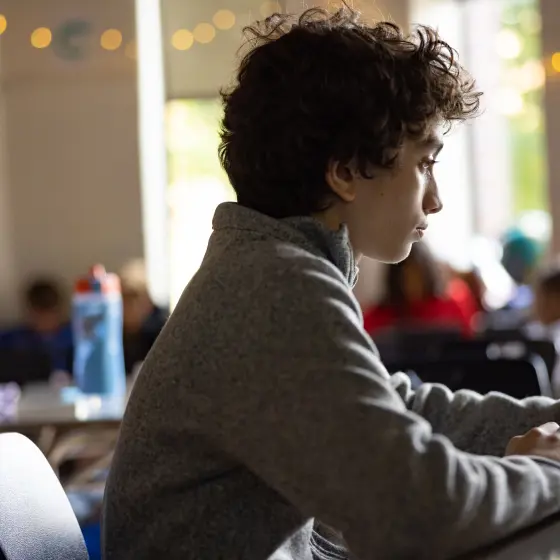
The middle school academic approach is thoughtfully designed to support students throughout their most formative developmental years. Friends Select director of middle school Desiree Harmon P’19 emphasized that middle school represents the second largest developmental leap behind birth to toddlership, with significant changes happening for students. “The middle school program is designed to support this crucial developmental stage while maintaining academic progress, as students bring their curiosity and excitement from lower school to their next chapter. Middle school expands student awareness to be globally and worldly aware of their surroundings,” Desiree explained. “Essentially, students grow their circle of understanding and critical thinking.”
For middle school science teacher Carolyn Gray-Rupp P’38, ’39, students need meaningful context to give their new knowledge a place to grow. She designs each unit to include a city connection or in-class demonstration to lay the groundwork for new vocabulary and discussions. “For example, we visit the Wagner Free Institute of Science to jumpstart our learning about urban ecology in fifth grade. Students return with numerous questions that we can call back throughout the unit, deepening their understanding in an authentic way,” she explained. “Similarly, when learning about watersheds, students make a crumpled paper watershed to see how the water moves along the landscape.”
Carolyn combines excitement with deep learning in her culminating interdisciplinary fifth grade architecture project. For social studies and science, students research the history of a city building or green space and create a scale model. In studying architecture and building structures, students apply scientific concepts to build a standing structure. “Students quickly found their individual learning edge, whether it was shifting between 2D and 3D perspectives to create rectangular walls from a floor-plan drawing or constructing a curved building layer by layer, such as the Buerger Center for Advanced Pediatric Care at Children’s Hospital of Philadelphia. They developed patience and persistence to work through multiple planning stages with a variety of analog and digital tools,” Carolyn said.
In middle school, the academic approach shifts to provide more independence, allowing students to take ownership of their educational experiences. In addition to maintaining high expectations, an important aspect of academic rigor in this developmental stage is meeting learners where they are as individuals. For example, students are offered opportunities such as independent math studies to test out of pre-algebra and work more autonomously under teacher guidance. These approaches are intentionally structured to aid learners in developing self-directed learning skills, preparing them for the increased academic expectations of upper school.
Upper School
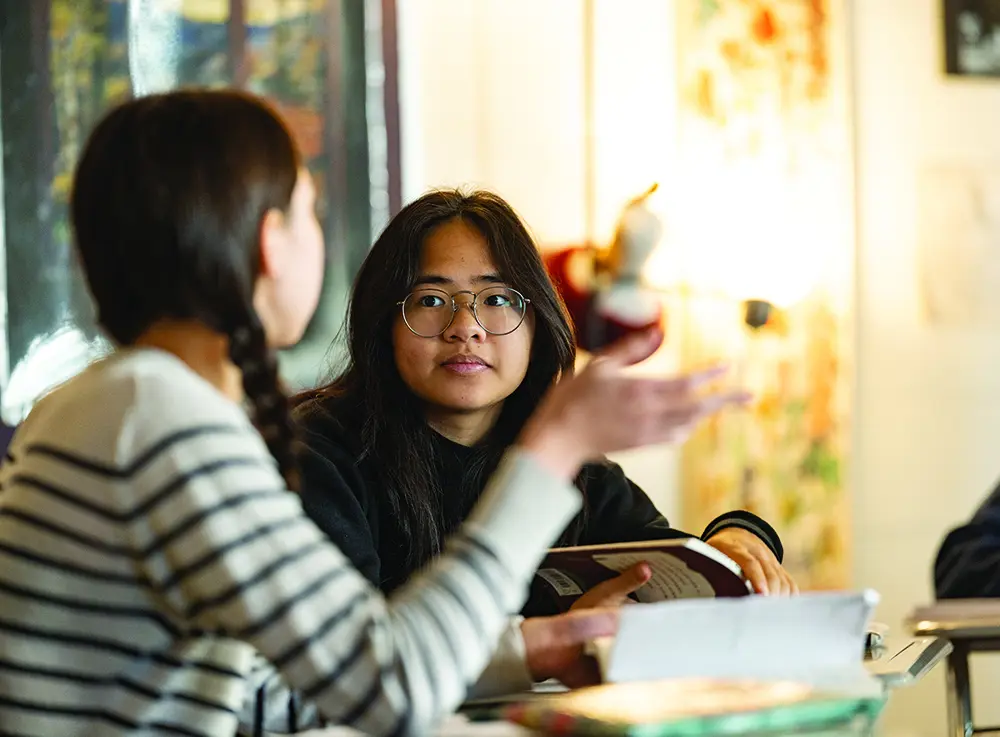
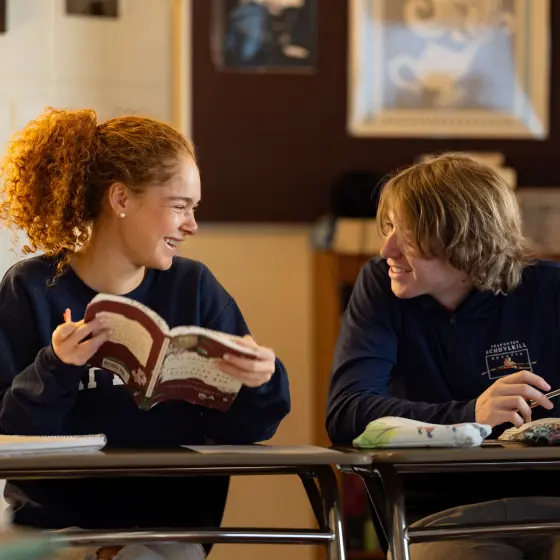
The upper school academic experience is defined by joyful rigor—an approach that challenges students without overwhelming them—and the ability to personalize academic experiences. “We are particularly well-positioned because of the size of the upper school, with 225 students, to give more individualized attention to students who need support, as well as those who need extension and challenge,” explained Friends Select director of upper school Chris Singler P’20, ’22, ’27. This approach allows students to curate their academic journey with opportunities to double up in subjects, take advanced courses, and pursue individual passions.
Excellence in teaching and learning is reflected in the dedicated upper school faculty. “We try to hire outstanding, talented teachers who we know will design thoughtful and challenging academic programs for all of our students,” noted Chris. This commitment is evident in comprehensive learning experiences, such as Dave Marshall’s quarter-long research project in 11th grade U.S. History, in which students build skills that extend beyond the classroom while being challenged to conduct historical research and written analysis.
The project builds on skills students have developed throughout their Friends Select experience, such as critical thinking fostered in the lower school and analytical skills practiced in middle school. With this project, students strengthen research skills, learn how to identify credible sources and use resource databases, and learn to properly cite their work. Additionally, they hone writing skills, from learning how to outline their work to proofreading for errors, clarity, and tone. “I tell students that even if they never take another history class, they still will use many of these skills in college and beyond,” Dave said.
Dave recently added a new requirement that juniors interview a person with expertise on their topic, or someone with firsthand experience. “The minimum requirement is that students contact at least two possible interviewees; most feel nervous at first, but ultimately find it quite rewarding. I’ve had students interview scholars and then end up partnering with them for their senior internship, whereas others have interviewed a grandparent and gained a deeper appreciation for their family history,” Dave said. “This year, I also partnered with our office of development and alumni relations to contact former FSS students, and this led to a rich variety of new interview leads that further enhanced the students’ research.”
From lower to middle to upper school, Friends Select intentionally designs the academic programming to evolve with students, honoring who they are while preparing them for their next chapter. In each division, faculty cultivate joy and academic challenges to offer an education rooted in Quaker values. Students of all ages are empowered to apply their learning meaningfully, ensuring they graduate prepared for college and other opportunities, and inspired to be lifelong learners who contribute to the world around them.